Monday, March 8, 2010
Spring Cleaning the Attic
How can I be talking about spring cleaning when we still have snow on the ground?! It's gotten warm enough over the last couple of days, though, for some grass in our yard to peep out. But I realize the rest of the country may be experiencing spring-like weather. It's a great time to clean the attic whatever the case.
Spring is a wonderful time to attack the attic - it's still cool enough to be able to tackle this decluttering job! You certainly don't want to wait until summer. And the timing is perfect - you may find you have enough for a yard sale. Now that's motivating, isn't it?
Start by walking around your attic to take a mental inventory of what you have there. Designate corners for each category - Christmas, other seasonal decorations, keepsakes, off-season clothing, suitcases and traveling accessories, home repair supplies - whatever categories represent your life.
Now that you have designated certain corners for the categories you have stored in your attic, it's time to sort.
Start in one corner of your attic. You may want to surround yourself with several boxes - one for each category plus one for giveaways. As you sort each item, ask yourself:
- is it necessary?
- have you used it in the last year?
- is it important to you or someone else?
- could someone else use it?
If you absolutely must keep the item you're sorting, place it in the appropriate box. Have a trash bag nearby for those things that don't even qualify for giveaways.
Work your way around the attic. You may discover additional categories as you go. You may also find items in your attic which would be better used elsewhere in your home. Be creative - are there some keepsakes you want to keep that could serve as storage containers in your house? Your mother's tea cups could hold jewelry in your dresser drawer, for example. A trunk could hold toys or linens.
Place each box in the corner you have designated for that category.
Now that you've decluttered and sorted, you're ready to look at your storage needs for your attic.
Look at each category to see what would best house those items. Do you need large clear storage containers for linens? Do you need small boxes for books? Do you need a place to hang out-of-season clothes? Do you need shelves, drawers, hooks, etc?
Before you go out and purchase storage containers, look around your house, basement, garage, etc. to see if you already have such storage. You may have an unused dresser that would work for storage if it were moved up to the attic, for example.
Label each container with the contents so when you're hunting for something, you don't need to open every container. If you are using clear storage containers, write your list on a piece of paper and slide it down the side of the container so you can read it without opening the box.
Celebrate - good job done!!


Thursday, March 4, 2010
A Basket a Day Keeps Chaos Away
Getting out the door in the morning is a monumental task for most families! In the past, we've talked about having a chart near your calendar, listing items each family member needs on specific days.
I recently read about an interesting way one person organizes items that must accompany members of her family out the door. She has a basket for each day of the week. Each basket holds items family members need on that particular day.
For example, if you need to return a borrowed item to someone you are going to see on Monday, stow it in Monday's basket. If a certain article needs to go to school on a particular day, placing it in the basket for that day insures it won't be forgotten. Library books that are due on Saturday can be dropped in Saturday's basket once read.
This is a great system for visual people, for people with ADD, and for those who don't like lists. Plus it cuts down on clutter because items have a place to live while they are waiting to leave the house.
But where to put those seven baskets? In a closet, perhaps. Or in a cupboard in your mud room or garage. Near the door where you exit your home, certainly.
I like this idea, don't you? Finding room for seven baskets might be a challenge, though.
More on getting out the door:
Getting Organized for School - Start the Night Before
Getting Organized for School - Creating a Hub
Get Organized for School (or life!) - A Family Calendar
Containerizing Your Kitchen
Yesterday I helped a client organize her kitchen. As we sorted through her cupboards and drawers, we came across containers she doesn't use any more. Some were sentimental and some were not. We placed the containers on the table.
When we came across items that needed to be containerized, we had a selection of containers to choose from. She loved it when we could use a sentimental container to house an item. For example, we used a cute little pitcher with a lid to store her tea bags.
She has a basket collection which does double duty by being beautiful as well as storing things like coffee filters and such. We came across tins, plastic containers, and jars - all of which are great kitchen storage containers.
When containerizing, don't forget to look at sentimental items as storage, if you like to keep such things around you. A nice way to repurpose items you love!
More on containerizing:
Don't Make the #1 Organizing Mistake
Spring Cleaning the Attic - Part 3
Get Organized Month - Declutter Your Pantry
Wednesday, March 3, 2010
Spring Cleaning Your Habits
Need some extra time? Who doesn't!?! A good place to look for extra scraps of time is those habits we do without thinking. Sometimes it's nice to take a step back and evaluate if certain habits are costing valuable time. Here are some potential time traps:
- Reading rather than skimming articles, blogs, emails to determine if they are of interest
- Stopping for coffee rather than making it at home for a fraction of the time
- Allowing others to hold you hostage with their meaningless conversation
- Watch too much news or TV
- Spending too much time on video games, Facebook, etc.
- Letting chores pile up rather than tackle them as they arise (dishes, cleaning, sorting mail, etc.)
- Napping rather than establishing good sleep patterns
Habits are a comfortable part of life, but they can also gobble up our time if we let them. Start paying attention to those habits you have in your life to determine if they are helping or hurting you.
More on habits:
Five causes to disorganization
Tools to Track Your Computer Time
New Sleep Study Shows Risks of Acute and Chronic Sleep Loss
Tuesday, March 2, 2010
Overwhelmed by Unfinished Projects?
As I've studied personality types, I've learned that there are people who like to have closure and those to whom it doesn't matter as much. The former usually like to finish projects or will force themselves to do so for the sake of closure.
The latter may lose interest before the project is finished. This may be due to the inability to estimate how much time will be needed to complete the project. In addition, these people may be creative, artistic individuals with unlimited ideas and possibilities, and, as a result, unfinished projects.
If you're one with numerous unfinished projects lying around, start making some decisions! Give yourself permission to discard unfinished projects! If you've learned what you want to learn, enjoyed the experience along the way, and are ready to move on to something else, say goodbye.
If you're not yet ready to give up a project, either set a deadline for yourself or box it up to finish another time. Or box it up as a keepsake. That way, your project will not be sitting there, mocking you because you didn't finish.
By making decisions about your unfinished projects, you will rid yourself of clutter as well as the heaviness and guilt associated with them.
More on projects:
A Dozen Ways to Take the Stress out of Big Projects
Delegation - A Key Ingredient for Efficiency
Helping Your Child Organize Large Homework Projects
Monday, March 1, 2010
5 Tips for Storing Books
Hope you had a nice weekend! Ours was full - a birthday party, some drama, and some good talks. So ... what about books?
- If you have books you'd like to store, make sure to do so in a climate-controlled location. Attics, basements and garages will not be kind to your books due to the fluctuating temperatures and humidity.
- Store in banker's boxes. A regular cardboard box falls apart over time, and its glue attracts bugs. Banker's boxes can be easily stacked and are small enough to prevent becoming excessively heavy.
- If your books are dusty, wipe them off before storing.
- If your books are moldy, dispose of them or call a mold remediation specialist. Amateurs are not equipped to deal properly with mold, as the process is quite complicated. If mold is not dealt with, it will multiply, endangering yourself and your surroundings. Unless your moldy books are extremely dear to you, it may not be worth the expense and cleaning process to keep them.
- If you are dealing with dusty or moldy books, wear a mask and make sure your surroundings are well ventilated.
More on books:
80 Awesome Ideas for All Your Old or Unwanted Books from Online Colleges
Tools to Inventory Your Books
Decluttering Your Books with BookMooch
Friday, February 26, 2010
Color-Coded Taxes
Snow day today and the roads are completely clear! Calling for 6-15 inches now! Of course, three of the four girls were up by the time the closing was announced. Today is one of our girls' birthday and she requested oatmeal pancakes for breakfast. So everyone ate pancakes and went back to bed except birthday girl and me. :) More on taxes ...
We've started color-coding our taxes. We choose a color for the year and use that color for all tax files. Instead of seeing a sea of manila file folders when looking for last year's tax info, it's easy to locate all pertinent files because they're all yellow, for example. So pleasant on the eyes! I'll take anything that makes taxes more pleasant. :)
More on taxes:
Taxes - Knowing Which Papers to Keep/TossOrganizing
Tax Receipts
Thursday, February 25, 2010
Turn Friday Afternoon Blahs into Aaaahhhs
Another 6-12 inches? Come quickly, Spring! Now for today's blog ...
Friday afternoon is a time when it's hard to get motivated to do work. Thoughts turn toward the weekend, and you're drained from the work week.
Change gears! Use Friday afternoon to plan your schedule for next week, evaluating your progress on your goals, and tweaking where necessary. Create a to-do list for Monday morning.
Look over what needs to be in place in order to do what you need to do next week. If there are some things you can do today to lay the groundwork for next week, get those out of the way, if possible.
Friday afternoon is also a great time to file, shred and straighten up your office. These things are important, but not worthy of using your more productive time earlier in the week. You may want to address medium- or low-priority emails and phone calls, if you've been able to tackle those that are high-priority during the week.
While beginning or continuing intensive projects may not be the best use of Friday afternoons, it doesn't mean the time needs to be wasted. By changing your mental gears, you're setting yourself up for a great week next week!
More on using time efficiently:
Uni-Tasking vs. Multi-Tasking
Do You Have a Mid-Afternoon Priority Check?
Trivial and Strategic Interruptions
Three Steps to Time Management at the Office
Wednesday, February 24, 2010
Organizing Tax Receipts
Getting your documentation ready for taxes is stressful enough without wading through mounds of receipts! If you are one who just stuffs receipts throughout the year, here's a hint to make life easier next year.
As you're sorting your receipts for this year's taxes, label two sets of file folders - one for this year and one for next year. By sorting this year's receipts into appropriate categories, you'll know which categories you'll most likely need for next year.
Drop next year's file folders into a hanging file. Now, instead of stuffing receipts into one location, take an extra moment to drop them into the appropriate file. Not much work now, but it saves hours of work later.
And if you file your receipts starting with January in the front, adding later receipts in the back, you will already have them in chronological order, too!
Even if you've already started stuffing this year's receipts, take some time and organize them into files. You'll thank yourself next year when tax time rolls around!
More on taxes:
Taxes - Knowing Which Papers to Keep/Toss
Taxes - a little at a time
Can Your Loved Ones Find Your Important Documents?
Tuesday, February 23, 2010
80 Awesome Ideas for All Your Old or Unwanted Books from Online Colleges
It's wonderful to be home again - and it's so quiet! LOL Let's talk about books ...
Once again Online Colleges has provided us with an amazing list of great ideas - this time, uses for old and unwanted books:
"Maybe the semester has passed and you forgot to sell back your text books, or perhaps you just held on to too many books over the years and now you need to figure out what to do with all of them. You don’t want to throw them away, so what is left to do with them all? Here are 80 awesome ideas that will have you realizing that books aren’t just for education.
Around the House
Use your old books around the house in creative ways with these ideas.
- Step aerobics. Don’t buy expensive equipment to do step aerobics at home. Use old books instead. Tape or cover them in fabric to keep them in place.
- Yoga block. Use a book or two as a yoga block.
- Coasters. Use small books as coasters for drinks. If you have a set, such as from a children’s book series, you can have a matching set of coasters for an eye-catching statement.
- Kneeling pad. Put some padding on an old book and tape it or wrap it in fabric to make a kneeling pad you can use while gardening.
- Table legs. Use a stack of old books to replace a missing table leg rather than throwing both the books and the table away.
- Book safe. Cut out the center of old books to hide valuables, such as extra cash or jewelry, in plain sight.
- Headboard. Choose the books with the best covers and make a headboard with them.
- Door stop. Are your doors never staying open? Use a heavy book to keep it in place.
- Step stool. If you have a hard time reaching the top shelves in your kitchen, tape books together to make a handy step stool.
- Make cheese. Homemade cheese, like the type used in Indian food, is easy to make. Use an old book to press the cheese after it has drained.
- In the freezer. Place pages from old books between foods in the freezer to keep them from freezing together.
- Paper towel substitute. Instead of using paper towels for absorbing grease off bacon or fried foods, use pages of a book. They can also be used in the same way to separate baked goods.
- Trivets. If you feel like you never have anyplace to safely put those hot pots and pans, try using an old book as a trivet.
Decorate
There’s no need to spend tons of money to decorate your apartment or house when you can reuse old books.
- Lamp. Use three books to make this fun lamp.
- Picture frame. Using a children’s board book, you can alter it slightly to create a custom-sized double picture frame.
- Wall art. Turn eye-catching covers or brightly-colored pages into wall art to decorate your home.
- Create art. Check out these art projects done with old books to spark your creativity for your own project.
- Make a hymnal angel. If you have an old hymnal lying around, make this stunning hymnal angel.
- Tabletop. If you have an old table that could use a facelift, use the pages of a book to decoupage a table top.
- Word plates. Use old plates and text cut out of old books to decorate in an unusual way.
- Wreath. Make an attractive wreath from an old paperback book.
 School and Office
From desks to pen holders to art journals, you’ll find great ways to reuse old books in your office or for school.
- Lap desk. Use an old book that is big enough to rest your laptop or papers on for a great, portable lap desk.
- Paper weight. Don’t let important papers get lost. Put them under an old book to keep them in place.
- Wall book shelf. Make a book shelf on your wall from a few old books.
- Book case. If you need more shelves for your books, make a book case out of hardback books like this one.
- Book ends. Lay stacks of books at either end of your upright books to keep them from sliding over.
- Pen holder. Make a pen holder out of the spine and pages of a phone book or other soft back book.
- Art journal. Gesso over the pages and you have an art journal ready to use.
- Magazine reader. Take the pages out of a book and recycle them, then slip a magazine into the hardback left behind to have a handy way to hold your magazines.
- Desk. If you have tons of books but no desk, then you are in luck. Stack your books and put a piece of wood or an old door on top to make a desk of your own design.
 Reuse the Pages
While hardcore book lovers may have a hard time tearing out the pages of any book, for those less faint of heart, use the pages of your old books in these creative ways.
- Recycle. Recycle them any place that takes old phone books for recycling. If they are hardback, tear out the pages for recycling, then reuse the covers for some of the great ideas here.
- Kindling. Use them as kindling to get your fireplace or camp fire started.
- Mulch. Shred them to make a great mulch for your garden or landscaping.
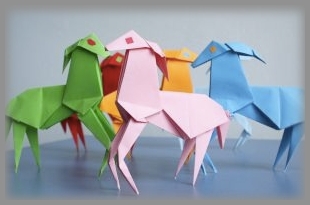
- Origami. If you are learning how to do this ancient Japanese art, practice with pages from your unwanted books.
- Packing material. If you need to send something through the mail, use the pages for packing material in your box. If your box is too big for the item you are shipping, you might even be able to wedge it between books to keep it from sliding in the box.
- Moving. If you have a move in your future, use the old pages to wrap breakable items for packing and moving.
- Cat litter. Use shredded pages for cat litter that is easy on the paws and the wallet.
- Wrap gifts. If you have small gifts that need wrapping, use a page or two from an old book.
Crafts
Make crafts from unwanted books like the ideas here.
- Make an envelope. You will want to have one side blank so you can address the envelope, but you can use pages for making envelopes for personalized notes or cards.
- Flowers. Make paper flowers from the pages to create a sweet gift for the book lover in your life.
- Basket. Instead of magazine pages, use book pages to weave a paper basket.
- Gift tags. Make unique gift tags from comic books or even the regular pages of any book.
- Stationary. Use pages of a book as the recycled paper needed here to create your own stationary.
- Gift bag. Instead of using expensive gift bags, make your own from book pages when it comes time for gift giving.
For Kids
Teach kids the importance of reusing when you utilize these awesome suggestions.
- Booster seat. If you know a toddler who can’t quite reach the dinner table, use big books as a booster seat. If you need to use more than one, tie them together to ensure they don’t slide off or cover the stack in old fabric.
- Leaf press. Have kids put leaves inside or under old books for pressed leaf art projects. This also works with flowers.
- Paper mache. Let the kids use pages from old books for paper mache projects.
- Confetti. Shred the pages of a book to make confetti for cascarones.
- Easter basket. Use shredded pages for lining Easter baskets instead of using plastic "grass."
- Paperback apple. Help your kids create a cute paperback apple that would make a great decoration for the house or unique teacher’s gift.
- Clock. You and your child can make a unique clock from an old children’s book for your child’s room.
- Reuse text books. Teachers and homeschool parents can use these great ideas for reusing old text books in resourceful and educational ways.
- Paper clay. Use book pages as the recycled paper in this recipe for making paper clay.
- Supply box. Cut out the middle of an old book and make an awesome box for the kids to keep their art or school supplies in.
Clothing and Accessories
Find out how to reuse books as clothing and accessories that will definitely turn a few heads.
- Paper dress. If you are feeling really creative, read about paper dresses and try your hand at making one.
- Brooch. Make a one-of-a-kind brooch from pages of a book and paper mache.
- Earrings. Fold a book page into an origami earring that will truly be eye-catching.
- Bracelet. Use your book pages and glue you make yourself to create a bracelet.
- Jewelry box. After you’ve made your jewelry from an old book, why not use another book to make a jewelry box to keep it in.
- Party hat. Make your own party hat from pages in a book. This works best if you have an old coffee table book with larger pages.
- Handbag. Use an old book with a cover you really like to create a fun handbag like this or this.
- iPod case. Make an iPod case from an old book.
Phone Books
It seems hardly anyone wants those phone books, even if they are current, but these keep showing up on doorsteps everywhere. Here are some great ways to put them to good use.
- Clean paint tools. Use the pages from a phone book to clean the paint off your brushes and other painting tools.
- Clean your windows. Tear out the pages and use them along with a mixture of vinegar, dish soap, and water to have a great window and glass cleaner.
- Gift bows. Cut strips of phone book pages to create fun bows to put on gifts.
- Wallet. Using the pages of a phone book and some tape, you can make a wallet in a matter of minutes.
- Flip book. Draw on the corners of a phone book to make a flip book.
- Coffee table. Check out this creative way to make a phone book coffee table.
- Cutting mat. Use a phone book as a cutting mat that will not harm your cutting blade.
- Toilet paper. It may not be as soft as what you buy in the store, but this toilet paper alternative sure won’t cost much.
- No phone books. Register to be taken off the list for phone book distribution and make sure they never make it in to your house or sign a petition to stop widespread distribution altogether.
 Getting Rid of Them
Find lots of creative ways to get rid of your old books without just throwing them away.
- Book swap. Have a book swap in your neighborhood to find new ones and get rid of old ones.
- Library. Donate your books to the local library when you are finished with them.
- Sell on the Internet. It’s easy to sell your books on the Internet, and it might even bring in a little extra cash.
- BookCrossing. Give your books away through a fun project like BookCrossing.
- Leave them at a coffee shop. Put a little "free" sign next to a stack of books and leave them at your local coffee shop.
- Hospital. Give your old books to hospitals. They will give them out to patients.
- Trade. Many used book stores will let you trade your old books for different books or for CDs or video games.
- Freecycle. Give them away through Freecycle.
- Gifts. Give them as gifts to the readers in your life–especially if you have old hardbacks that book collectors might appreciate."
Aren't these amazing ideas?
More on books:
Decluttering Your Books with BookMooch
Monday, February 22, 2010
What is #1 on Your Agenda Each Day?
We've had a lovely visit with our daughter - heading back home today. We got to meet her friends, cook together, play games, talk - so nice to be together! On to our blog:
What is #1 on your agenda each day?
Read your emails? Read your texts? Listen to messages? Look at the mail? Nope.
Your first priority each day should be to look at your calendar, which should include your prioritized to-do list.
It is so easy (and tempting) to take a look at what has come into your inbox first thing in the morning. By doing so, however, you may become distracted by interesting or even important information, which will likely keep you from attacking your top priority for the day.
By tackling your top priority first thing in the morning, you'll be accomplishing the most important and most urgent item on your to-do list. When you need to take a break (usually after 45 minutes of concentrated work), look over your inboxes (mail, email, texts, etc.). But don't let them distract you from your work when you need to return to it.
Schedule times during your day to deal with your email and phone calls - but not at the beginning of the day (unless it is your highest priority!). Turn off the alerts that notify you of new emails to reduce further distractions. Notify your clients, co-workers and others of the times when you will return email, phone calls, etc.
By keeping your calendar in front of you, it will act as a filter when potential interruptions present themselves. If you are aware of your calendar and your to-do list, you may be able to request that the interruption take place at a more appropriate time during the day. For example, if someone needs to talk to you, ask if it might be discussed at a time when you anticipate you'll need a break anyway. Deliberate carefully before interrupting your work when you're on a roll.
I have a list of three or four things I do first every morning - my top priorities. That way, I don't find myself wandering through the day, but concentrating on those things which matter most.
More on Efficiency:
Three Steps to Time Management at the Office
Trivial and Strategic Interruptions
Creating Routines and Systems
Friday, February 19, 2010
Bugs in the Pantry?
Get to spend some time with one of our daughters this weekend! Woohoo! Now, on to the exciting topic of bugs:
Are you finding bugs in your pantry? Here are a few suggestions I gleaned from a chat with fellow organizers:
1. [I] have a client where we recently discovered bugs in some old, opened breakfast cereals in her pantry (guessing they are those grain moths). We threw everything opened out, and completely vacuumed and cleaned the entire pantry. We're now looking for a non-toxic 'trap' to keep the problem under control and from recurring. Can anyone recommend a safe product to use? In a web search, I found 'The Pantry Pest Trap' by Safer Brand, but thought I'd ask this fine group for their expert recommendations before purchasing anything.
2. You did good to toss everything, vacuum, etc. Yes..."The Pantry Pest Trap" is the most effective and efficient. As a former Master Gardener, these are what are recommended for pest control, and I use them as a regular control item in my own pantry. They are remarkably effective, cheap, and are 'pheromone' traps that attract the males inside the little brown triangle-like cardboard container making it safe and away from other foods. Replace entire trap every week or so - depending on amount of infestation....every 6 months if used as deterrent. And, there is NO odor or danger to other pantry foods!
Although initially 'disgusting' to think about, these pests (Indian meal moths), can do a lot of damage to the grain industry, and are in fact how these pests arrive in our cupboards! I won't go into more details here, but consider them a type of 'natural result' of today's pantry grains and tell your client not to take it too personally.
There are other herbal-type remedies, but I found that they are not always very effective, needed constant babysitting, replacement maintenance, and frankly...who's got the time? Just go for it the right way the first time! Good luck!
3. -Wipe down the surfaces with vinegar. Test an inconspicuous spot first, just to be sure it doesn't ruin the finish on the surface. While wet, the vinegar will smell, but it becomes odorless once dry. If your client is sensitive to the smell, air out the room as you work.
-Most pests don't like strong-smelling herbs. Spearmint, peppermint, and bay leaves are usually offensive to them. Scatter some leaves on the shelves.
-Store food in glass, not plastic. Plastic tubs often have lids that don't seal fully, or leak food aromas that entice insects and rodents. Bonus -- food will stay fresher longer because glass is impermeable.
4. I've lived in the country for over a decade. Critters outnumber people by a considerable margin here, but other than the occasional fruit fly hovering near a banana I don't have any unwanted visitors in the kitchen. We store everything in glass canning jars, and never have to bother with pest repellent. Simply make the food supply inaccessible and the critters will shop elsewhere.
5. About 3 years ago I started microwaving grains upon bringing them home and I’ve not seen a single grain beetle since. I put a whole 5 lb bag of flour in the microwave about 3 min at 50% power. It destroys the critters & eggs without affecting the quality of the flour. I then store in air-tight containers in the pantry (Lock & Locks are my all-time favorite) or keep in the fridge or freezer to prevent re-infestation.
Valuable information, isn't it?!
More on kitchens/pantries:
Three Steps to Organizing Your Kitchen
Organizing the Pantry
Decluttering in 5 - Check out the Shelf Life of Your Spices
Thursday, February 18, 2010
Uni-Tasking vs. Multi-Tasking
Looking forward to a few days off starting tomorrow! Aaaaaahhhhhh! Now on to our blog:
Multi-tasking was the darling of time management experts in days gone by. Now that we've had time to study multi-tasking, research has shown that it may not be as efficient as we thought.
Studies have shown that when we jump from task to task, it takes time to regain focus. Trying to do two tasks at once, with at least one requiring concentration, reduces the quality of work.
For tasks that require concentration, uni-tasking is best. Taking a break every 45 minutes or so refreshes your brain. A quiet place to work without interruptions or distractions increases productivity and efficiency.
There are definitely times and places for multi-tasking, though. These occur when tasks at hand are low-risk - what I like to call mindless activities. They can be interrupted and don't require great concentration.
At the office, shredding, filing, straightening your desk, deleting emails, etc., might be done while on hold or during casual phone conversations. At home, many household chores can be done while on the phone, watching TV, etc.
A key question to ask is whether interruptions will cause you to lose your focus and/or productivity. An interruption while dusting is not a problem, but an interruption while writing a proposal or working on a project can derail your train of thought.
Knowing when to uni-task and when to multi-task is an essential time management skill!
More on time management:
1-2-3 ... Get Organized series on Time Management
Trivial and Strategic Interruptions
Functioning at Peak Performance by Planning Quiet Moments
Increasing Efficiency
Wednesday, February 17, 2010
Getting Your Affairs in Order
We celebrated our new girl's birthday yesterday. I think she was a bit uncomfortable as she is not used to all the hoopla. She was embarrassed to be the center of attention, but I think she was touched by the effort and kindness shown to her by all, even though she has only been with us for a week.
Ok, let's change gears drastically and talk about getting your affairs in order before you become ill or die:
This is an unpleasant subject, but part of being organized is providing your loved ones with accessibility to important information should you become ill or die. You don't want them to be scrambling around trying to find information they need in order to care for you.
Information needed:
- a list of important documents and where they are located (see below)
- a list of your internet accounts and passwords (email, Facebook, website, banking, etc.)
- a list of people to contact in case of death.
What documents are important? Here's a list:
- Health Insurance Policies
- Primary Health Insurance
- Supplemental Medical Insurance
- Medicare Card
- Long-term Care Insurance
- Disability Insurance
- Life Insurance (Agent, Beneficiaries)
- Funeral Insurance Policy
- Financial Accounts and Valuables
- Safety Deposit Box and Keys
- Checking and Savings Accounts
- Brokerage Accounts
- Stocks and Bonds
- Jewelry/Coins
- Appraisals and Inventory Lists
- Retirement and Benefit Plans
- 401k Plans
- Profit Sharing/Pension Plans
- IRA Accounts
- Military Benefits/Records
- Social Security Records
- Debt
- Credit Cards
- Outstanding Bills/Loans
- Taxes
- Annual Income Tax Records
- Property Tax Records
Once you have created the above lists, you'll need to inform your loved ones of the whereabouts of your lists. Better yet, copy and send them to your loved ones. If some of your documents or valuables are in a safe deposit box or safe, make sure to include the location of the keys or combination. If you are responsible for the care of a relative, make sure you know where his/her information is.
I know this is not a favorite topic, but it will give you and your loved ones peace of mind in the meantime and the ability to care for you in a timely manner if necessary.
More on preparedness:
National Preparedness Month - Choosing Emergency Contacts
National Preparedness Month - Emergency Kit #7 - Medications and Medical Supplies
National Preparedness Month - Emergency Kit #2: Landline Phone
Tuesday, February 16, 2010
Is Clutter Putting a Strain on Your Relationships?
Hope you had a nice weekend! Our girls were out of school yesterday for President's Day. Today will be the first day our new girl will be riding the bus to her school - yay! So we now have four girls going to three schools. Crazy, huh? Now on to our blog for today ...
I came across the following article by Kijiji (an ebay-type business), about how clutter can strain relationships. Thought you might enjoy it!
"Battle of the Sexes
Whether it's a pair of designer shoes or a set of golf clubs, unused items can clutter up a home quickly – and can lead to a battle of the sexes. The survey found that 40% of women and 31% of men choose to hoard unused items. Regardless of whether you're fighting over valuable closet space or the money wasted on items that simply sit around, both men and women complain that their partner's unused items clutter up the home. In fact, 27% of men and 17% of women admit that their significant other's unused items cause some of the greatest conflicts in their relationship.
Making Some Sense
In light of these findings, below are a few tips to help couples put away their household differences. Despite your partner's reasoning for keeping an item, there's always a solution available. Below are a few tips to help you successfully negotiate the most common excuses:
- "I might use this again."
Nearly half of Americans, 46% of men and 49% of women, convince themselves that they will use an item again someday, despite the odds that it's probably not true. If your partner insists that the item in question is usable, negotiate a time frame for him or her to do so. For example, if they don't ride the bicycle in the garage by next summer, then it's time to sell it.
- "These remind me of..."
We all know people who become emotionally attached to their belongings, and with 14% of men and 18% of women admitting to keeping unused items simply for sentimental reasons, it's no wonder their living spaces are cluttered! Whether it's an afghan that your great aunt knitted or a college T-shirt reminding you of your glory days, there are certain things that are simply difficult to part with. Allow yourself to keep a few special items, as long as you have the space for them. Then, set aside some time during a weekend to go through the other items that you don't plan to keep and take photos of them. Once they're sorted and you have a reminder photo of each, consider selling them online to clear out space while making some extra money in the process.
- "I have no time to clean."
Instead of trying to tackle your entire house at once, commit to decluttering one area or room at a time. By working on your closet one day and your garage the following weekend, you'll get the job done without tiring yourself out, and it'll be easier to accomplish your goals once they're not so overwhelming. Items that you simply aren't using should be sorted into "trash" and "sell" piles. You'll be surprised at how much extra money you have sitting around the house in the form of unused old toys, appliances and sporting goods!
Converting to Cents
Not only can decluttering together help your relationship by alleviating stress, but it can also help you to make extra money in the process by reselling the items you no longer use. Whether it's a kitchen appliance, a handbag or a set of golf clubs, these are all items that can easily be sold online."
More on decluttering:
Three Steps to Decluttering
Declutter Sentimental Clothing - Turn Them into a Quilt
10 Types of Emotional Clutter
Your Priorities, Passions, and Gifts Create Context for Your Clutter
Subscribe to:
Posts (Atom)


 Posts
Posts